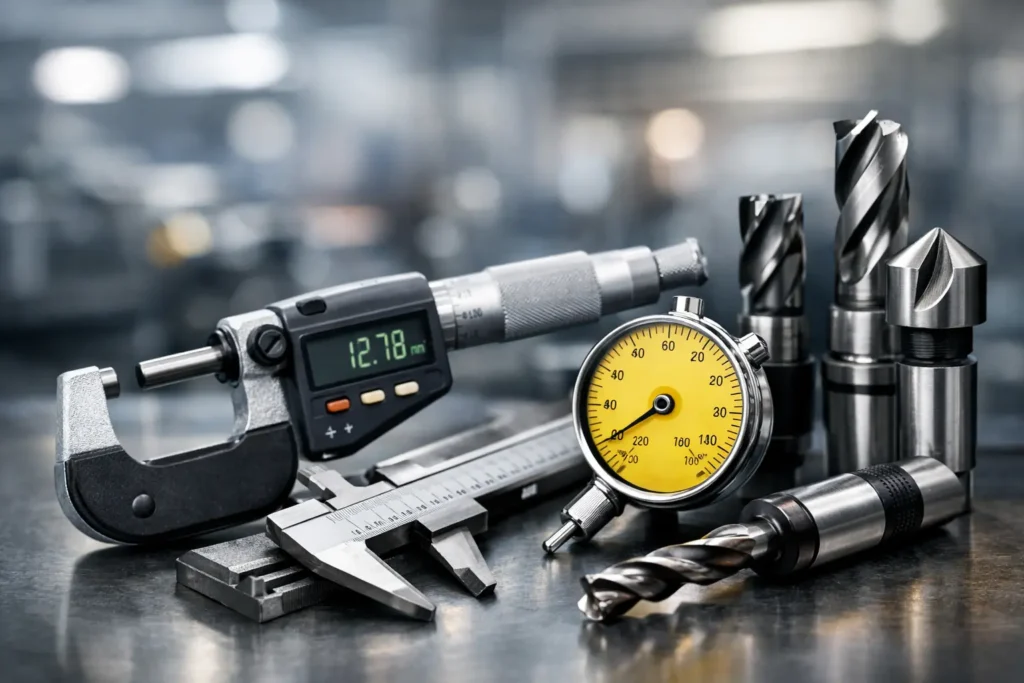
Industrial manufacturing requires tools that can deliver consistent results across repeated production cycles. Threaded components and precision gears must meet specific dimensional requirements to function correctly in demanding mechanical applications.
The choice of tooling can influence production accuracy, component quality, efficiency, and inspection results. Manufacturers should therefore consider the component design, material, machine configuration, production volume, and required tolerances before selecting a tooling solution.
Why Precision Tooling Matters
Manufacturing accuracy is important for components that need to fit and operate with other parts. Even small variations in profiles or dimensions can affect assembly and performance.
Suitable tooling can help manufacturers maintain:
- Accurate component profiles
- Consistent dimensions
- Repeatable production
- Reliable surface quality
- Efficient manufacturing
- Better process control
A carefully planned tooling strategy can improve both production consistency and quality.
Understanding Thread Rolling Dies
Thread rolling is a forming process that creates threads by applying controlled pressure to a workpiece. The material is displaced to form the required thread profile instead of being removed through conventional cutting.
When evaluating thread rolling dies manufacturers, manufacturers should consider die geometry, dimensional consistency, material suitability, manufacturing quality, and application experience.
The correct die should match the thread specifications, workpiece material, rolling machine, and production requirements.
Factors in Selecting Thread Rolling Dies
Several factors should be reviewed before choosing a die.
Thread Specifications
Thread size, pitch, profile, and other dimensions determine the required die characteristics.
Workpiece Material
The material being formed can influence the rolling process and tooling requirements.
Machine Configuration
Dies must be compatible with the available rolling equipment and its operating conditions.
Production Volume
High volume applications may require tooling capable of maintaining reliable performance over extended production cycles.
Understanding Master Gears
Master gears are precision reference components used in gear manufacturing and inspection. They provide a controlled reference for evaluating gear characteristics and tooth engagement.
Because they are used for measurement and comparison, their accuracy is especially important. Selection should be based on the gear specifications and inspection requirements involved.
Proper handling, storage, and periodic verification can help preserve the accuracy of these reference components.
Choosing Master Gears Manufacturers
When comparing master gears manufacturers, manufacturers should evaluate precision, manufacturing consistency, technical expertise, quality control, and application knowledge.
A reliable provider should understand the relationship between the reference gear and the gear being inspected. The appropriate specifications should be established according to the intended measurement and production requirements.
Maintaining Tooling Accuracy
Tool condition can influence both manufacturing and inspection results. Regular checks can help identify wear, damage, or dimensional changes before they create production problems.
Proper machine setup is also important. Alignment, workholding, tool positioning, and controlled operating conditions can contribute to consistent results.
Precision reference components should be handled carefully and stored in suitable conditions to minimize the risk of damage.
Working With an Experienced Tooling Provider
Manufacturers can benefit from suppliers that understand different industrial tooling applications. Product quality, technical knowledge, manufacturing capability, and application support are useful factors when evaluating potential providers.
SS Tools offers tooling solutions for gear and thread manufacturing applications. Manufacturers can assess its products according to component specifications, production methods, machine capabilities, and inspection requirements.
Supporting Better Production Quality
Quality tooling should be combined with effective manufacturing practices. Preventive maintenance, regular inspections, accurate machine setup, and controlled production conditions can help maintain consistent results.
Monitoring finished components can also help identify recurring issues and provide useful information for improving future tooling and process decisions.
Conclusion
Precision tooling is essential for dependable industrial manufacturing. Experienced thread rolling dies manufacturers can provide solutions for consistent thread forming, while capable master gears manufacturers can support accurate gear inspection and quality control.
By evaluating component specifications, material, machine compatibility, production volume, and accuracy requirements, manufacturers can choose tooling that supports reliable quality and efficient production.